

The Ultimate Guide to Brisket Knives: Slicing, Trimming & Carving Like a Pro in 2026
on Sep 15 2026
The short answer to finding the best brisket knife? You need a long, straight-edged slicer between 10 and 12 inches. That specific length allows you to cross a whole brisket flat in a single stroke, delivering clean, even slices instead of the sawing motion that tears grain and squeezes out precious juice.
But a great knife is only half the equation. Whether you are a competition pitmaster or a weekend backyard chef, mastering brisket requires the right tools for every stage of the cook—from trimming the raw fat cap to organizing your prep station before the smoker even lights up.
At Havenity, we believe professional results start with professional preparation. Here is your complete guide to choosing the right blade and setting up your workflow for the perfect slice.
Why Brisket Needs Its Own Knife
Brisket is unique. After 12+ hours in the smoker, the muscle fibers become incredibly tender. A standard 8-inch chef’s knife has a curved belly designed for rocking; if you use it on brisket, you will shred the meat rather than cut it.
A dedicated brisket knife features:
- Length: 10–14 inches to span the full width of the flat.
- Geometry: A thin, straight grind (no belly) that tracks in a line.
- Flexibility: Enough give to follow contours, but enough stiffness to prevent uneven slices.
This combination gives you uniform thickness end-to-end. And remember: a brisket that looks uneven on the board reads as "badly cooked," even if the smoke ring is perfect.
The 3 Blades You Actually Need
1. The Slicer (For the Board)
This is your primary tool. Look for a 10 to 12-inch straight-edge slicer. Many premium options feature a Granton edge—shallow hollows ground into the blade that create air pockets. These aren't serrations; they simply break suction so slices release cleanly without sticking or tearing.
Pro Tip: Avoid serrated or electric knives for brisket. Serrations tear soft fibers, and electric blades vibrate against the meat, creating a ragged face. A sharp, smooth slicer is always superior.
2. The Trimmer (For Prep)
Trimming is the opposite of slicing. You need a short, stiff, pointed blade (5–6 inches) to work the fat cap, remove hard fat between the point and flat, and pull silverskin. A 12-inch slicer is a liability here—you need precision, not length.
3. The Carver (For Presentation)
If you want a knife that transitions from the cutting board to the dining table, look for an aesthetic 10-inch blade with an ergonomic handle. This is the tool you bring out when guests are watching.
Don’t Forget the Prep: Organize Before You Slice
Even the sharpest knife fails if your workspace is chaotic. Winter grilling or large batch cooks require a system to keep raw meats, trimmed fat, and sliced portions organized and safe.
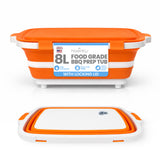
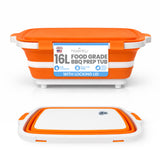
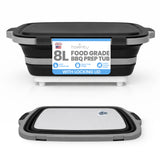
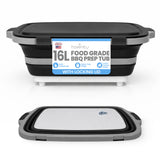
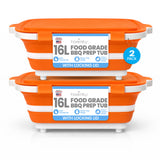
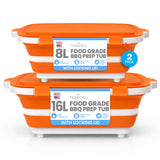
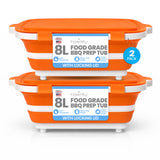
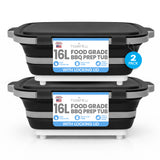
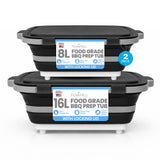
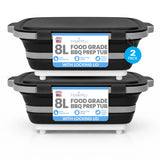
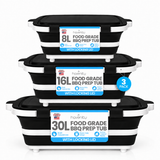
This is where the Havenity BBQ Prep Tub becomes essential. Designed as a meat prep tub, it keeps your trimming station clean and your ingredients accessible. Use it to:
- Collect trimmings and silverskin as you work.
- Hold marinated cuts before they hit the smoker.
- Transport prepped briskets from kitchen to grill without mess.
- Separate raw proteins from finished slices during service.
It’s durable, food-grade, and built for the rigors of outdoor cooking. Learn more about what a prep tub is and why every backyard chef needs one this grilling season.
How to Slice Brisket Like a Pitmaster
The knife solves half the problem; technique solves the rest.
- Rest the Meat: Never slice immediately. Rest for 30–60 minutes to let juices redistribute.
- Find the Grain: A packer brisket has two muscles (point and flat) with grains running 90° apart. Separate them first. Always slice against the grain.
- Use Long Pulls: Draw the knife toward you in one continuous motion. Let the sharpness do the work—never press down.
- Wipe the Blade: Rendered fat builds up quickly. Wipe between passes to prevent drag.
- Slice to Order: Pre-sliced brisket dries out fast. Keep it whole until serving.
Maintenance: Protect Your Investment
A quality brisket knife deserves care:
- Hand Wash Only: Dishwashers destroy edges and handles.
- Hone Before Every Cook: Realign the edge with a honing steel.
- Sharpen Seasonally: Use whetstones (1000-grit sharpening, 4000+ finishing) or professional service 2–3 times per year.
- Store Safely: Use a sheath, magnetic strip, or block. Never toss it in a drawer.
Frequently Asked Questions
Can I use a chef’s knife?
You can for small cuts, but the curved belly and short length make it impossible to get even slices on a full packer.
How thick should slices be?
Aim for pencil-thickness (~¼ inch) for the flat. The point can be slightly thicker or cubed for burnt ends.
Is Japanese steel better?
Japanese-style slicers are thinner and harder, cutting with less force. However, they are less forgiving on bone or frozen fat. Reserve them for slicing only; use a butcher knife for rough trim work.
Ready to Elevate Your BBQ?
Your brisket deserves better than a dull blade and a cluttered counter. Explore our full collection of BBQ & Grilling essentials at Havenity, where professional-grade tools meet smart design.
Share